

When I first set up a living room without a coffee table, I honestly thought it would feel calmer and more open. After living on my own again, I realized decorating doesn’t always come naturally, and that empty space in the middle of the room started to feel unfinished instead of intentional. A living room without a coffee table can work, but only if the layout already feels balanced, and mine didn’t quite get there yet.
As I spent more time in the space, I noticed how often I needed a surface nearby. In a living room without a coffee table, you start improvising—books on the floor, drinks balanced on armrests, or side tables doing all the work. That’s when I started considering softer options like an oval or glass table that wouldn’t visually overwhelm the room. It reminded me of lessons I learned while styling a Corner Sofa Living Room, where function matters just as much as how light or heavy a piece feels.
What helped most was stepping back and thinking about flow instead of rules. Even in a living room without a coffee table, the seating, rug, and wall art need to feel connected. Adjusting the couch placement, anchoring the space with a rug, and choosing one strong piece of wall art above the sofa made the room feel more complete. I realized decorating isn’t about having an instinct, it’s about trying, adjusting, and slowly understanding what actually works for how I live.
14. Use Side Tables Instead
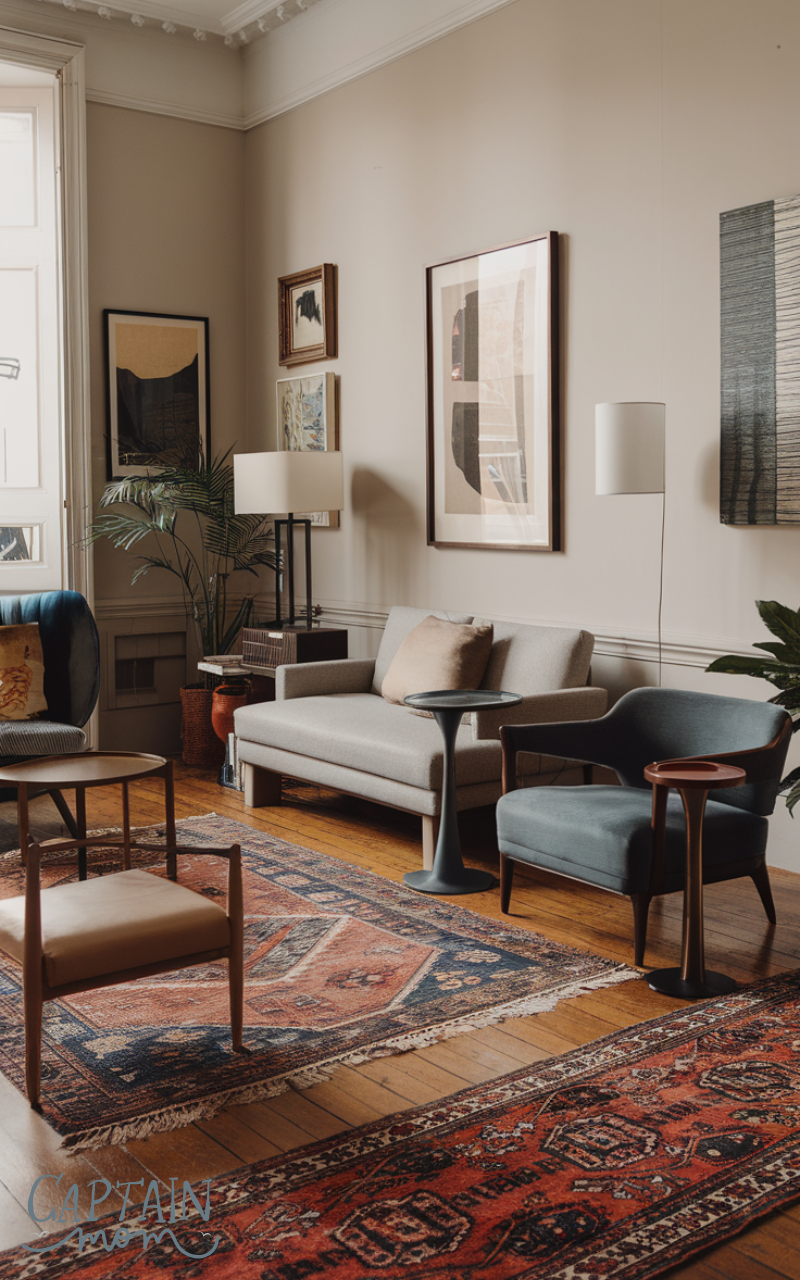
Using side tables is one of the smartest layout ideas for a living room without a coffee table because they offer surface space without blocking movement. Place one or two slim side tables next to sofas or armchairs to hold drinks, books, or décor. This keeps the center of the room open and makes the layout feel lighter and more flexible, especially in small or high-traffic living rooms.
13. Add a Large Area Rug as the Anchor
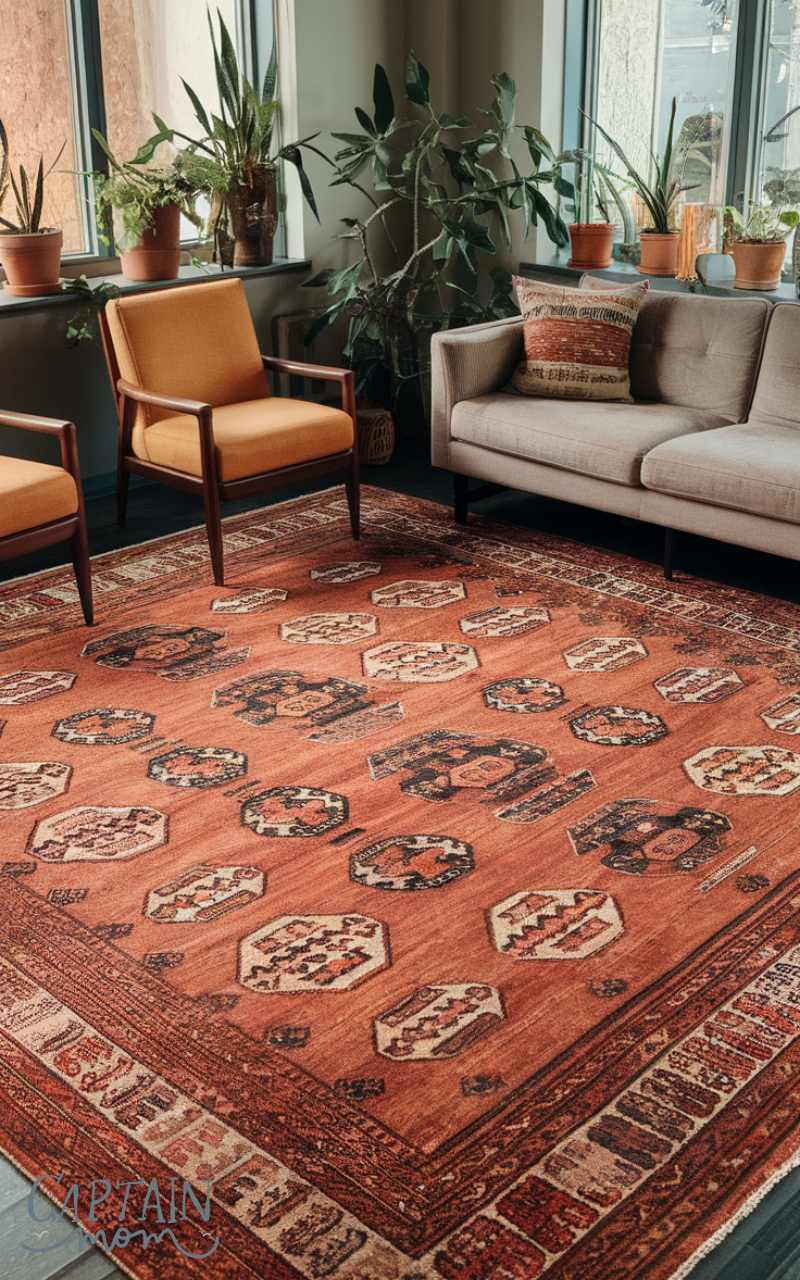
A large area rug is essential in layout ideas for a living room without a coffee table because it visually defines the seating area. Without a central table, the rug becomes the focal point that grounds the furniture. Choose a rug large enough for at least the front legs of all seating pieces to rest on it, creating cohesion and balance.
12. Use an Ottoman as a Flexible Centerpiece
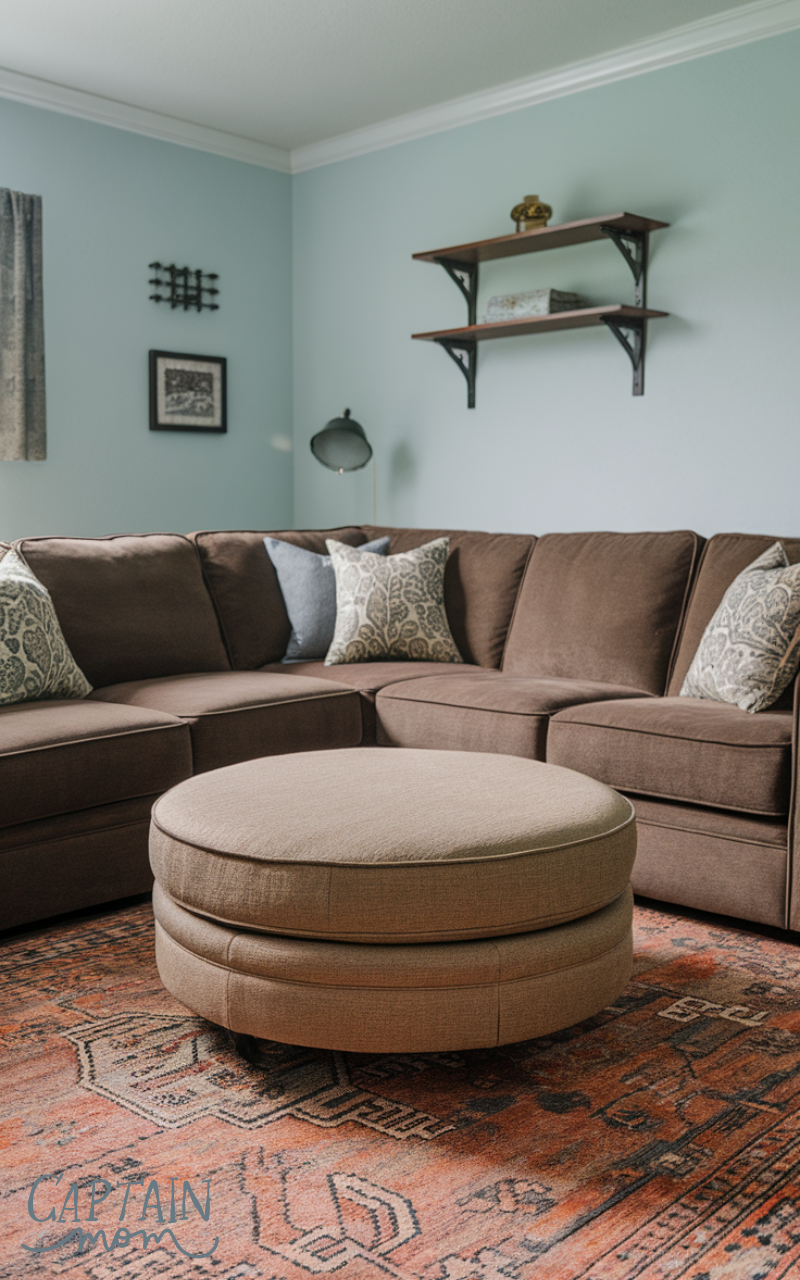
An ottoman is a popular option in layout ideas for a living room without a coffee table because it can act as a footrest, extra seating, or a soft surface for trays. Upholstered ottomans keep the space cozy and family-friendly while maintaining an open feel. Choose one that complements your sofa for a seamless look.
11. Keep the Center of the Room Open
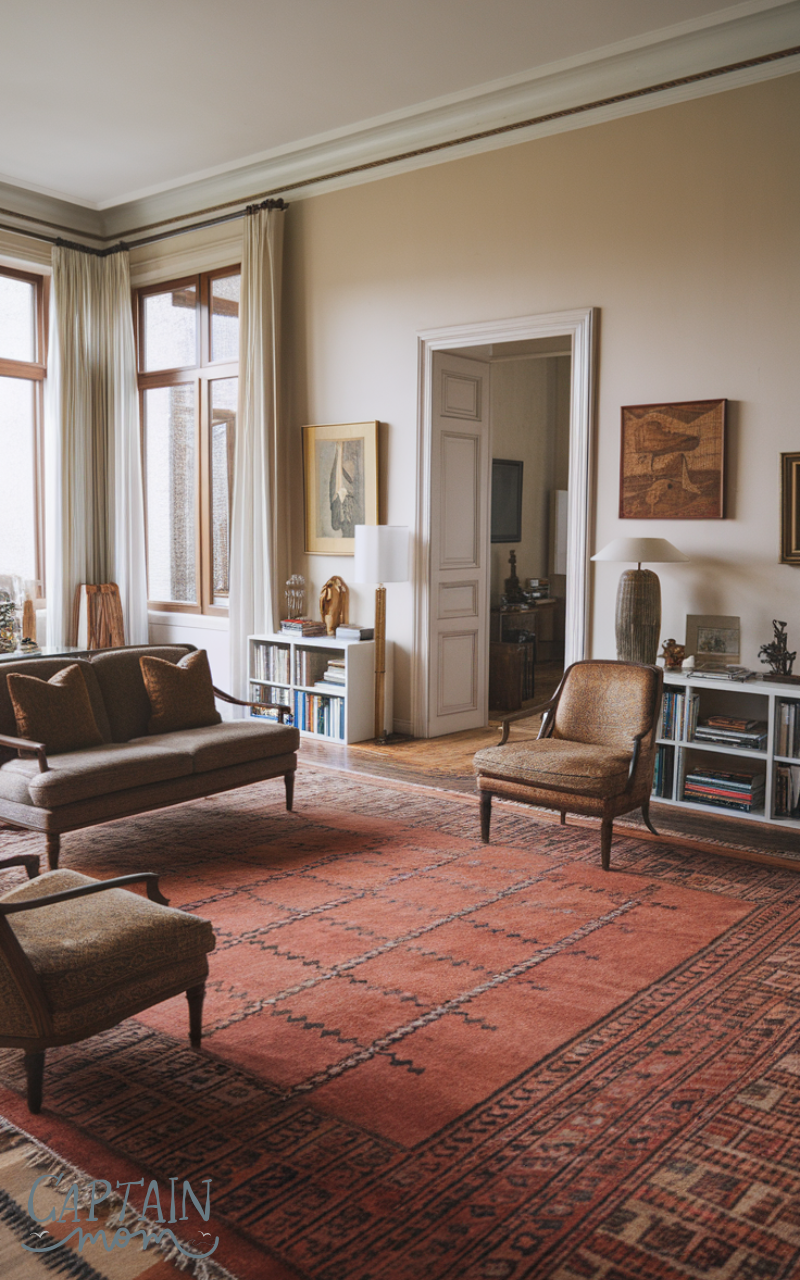
An open center is one of the most effective layout ideas for a living room without a coffee table when you want a spacious and airy feel. Leaving the middle empty improves flow, makes the room feel larger, and works well for homes with kids or frequent guests. This layout encourages movement and flexibility.
10. Use Floor Poufs for Casual Seating
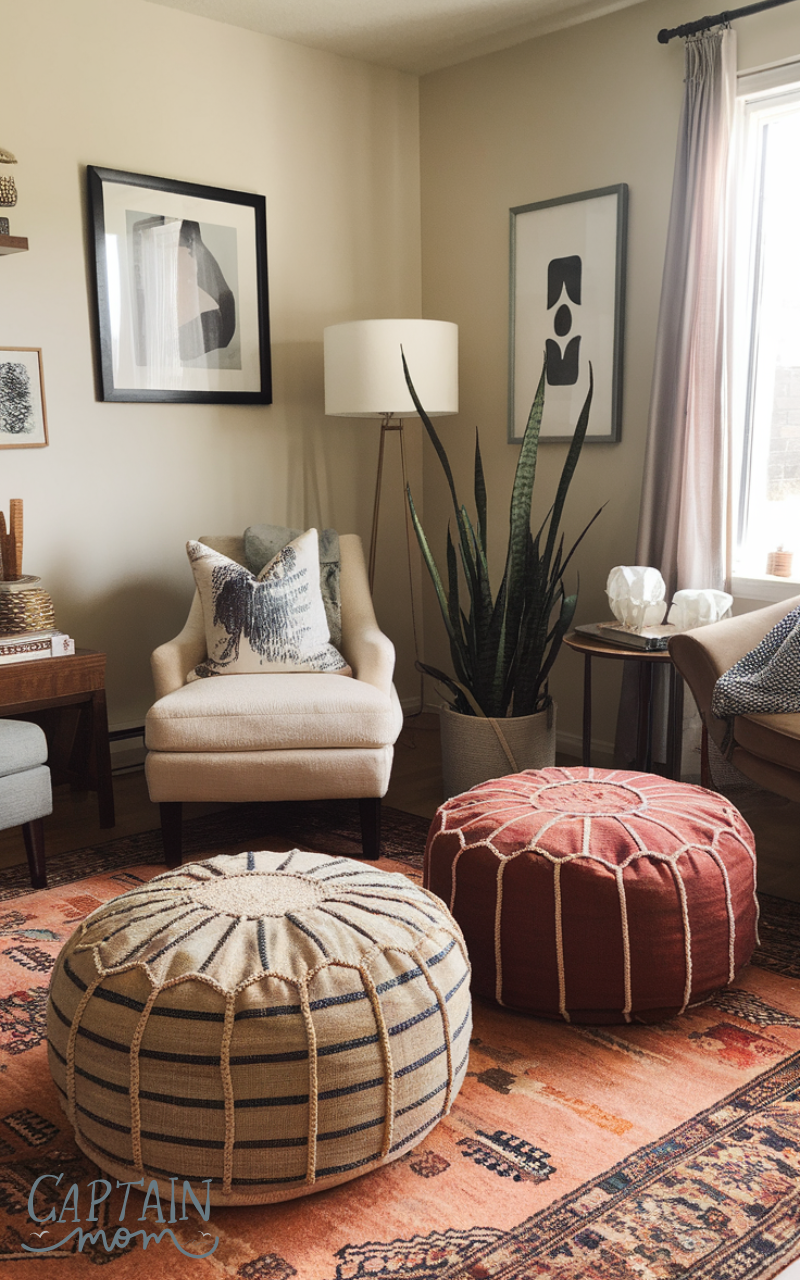
Floor poufs are creative layout ideas for a living room without a coffee table because they add seating without visual heaviness. They can be moved easily, tucked away when not needed, and styled with texture or color. Poufs keep the room relaxed and informal while still being functional.
9. Place a Console Table Behind the Sofa
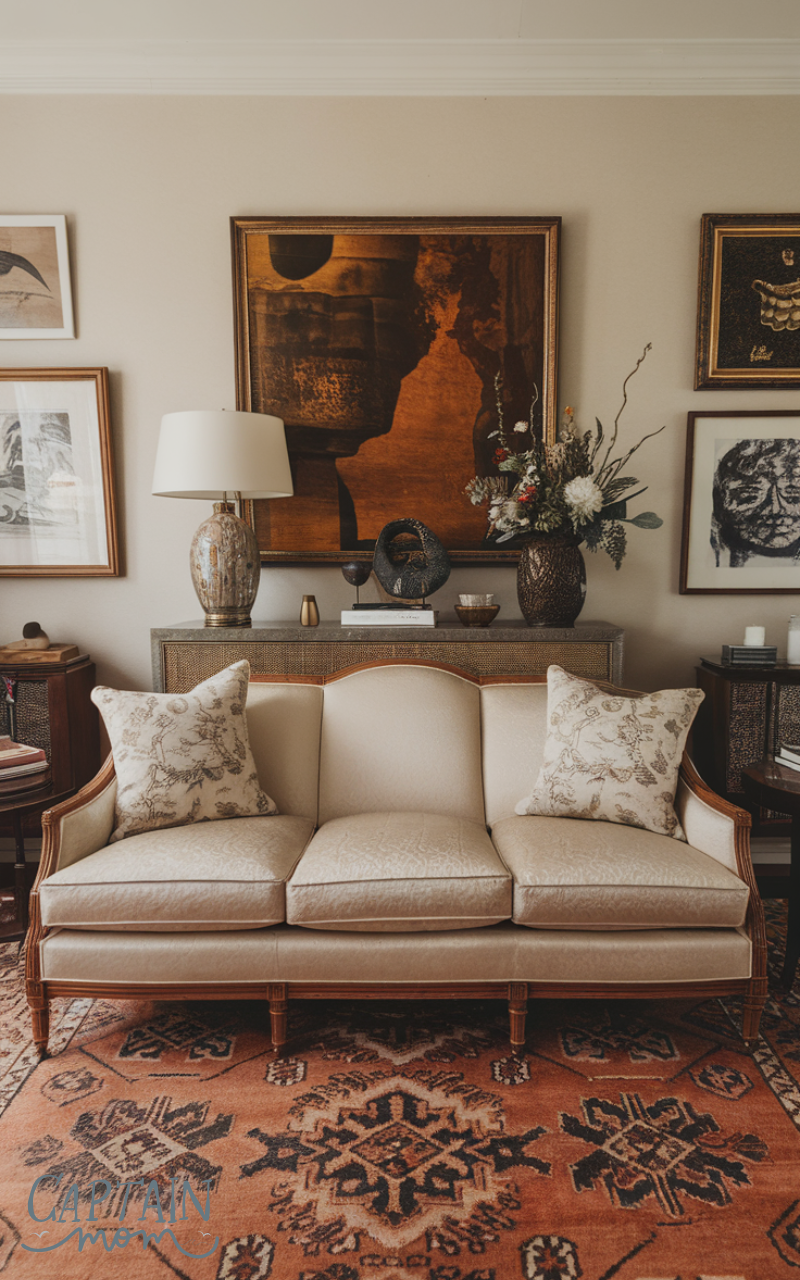
A console table behind the sofa is a clever solution in layout ideas for a living room without a coffee table. It provides surface space for lamps, books, or décor without interrupting the seating area. This works especially well in open-plan living rooms where the sofa floats in the space.
8. Use Nesting Tables Only When Needed
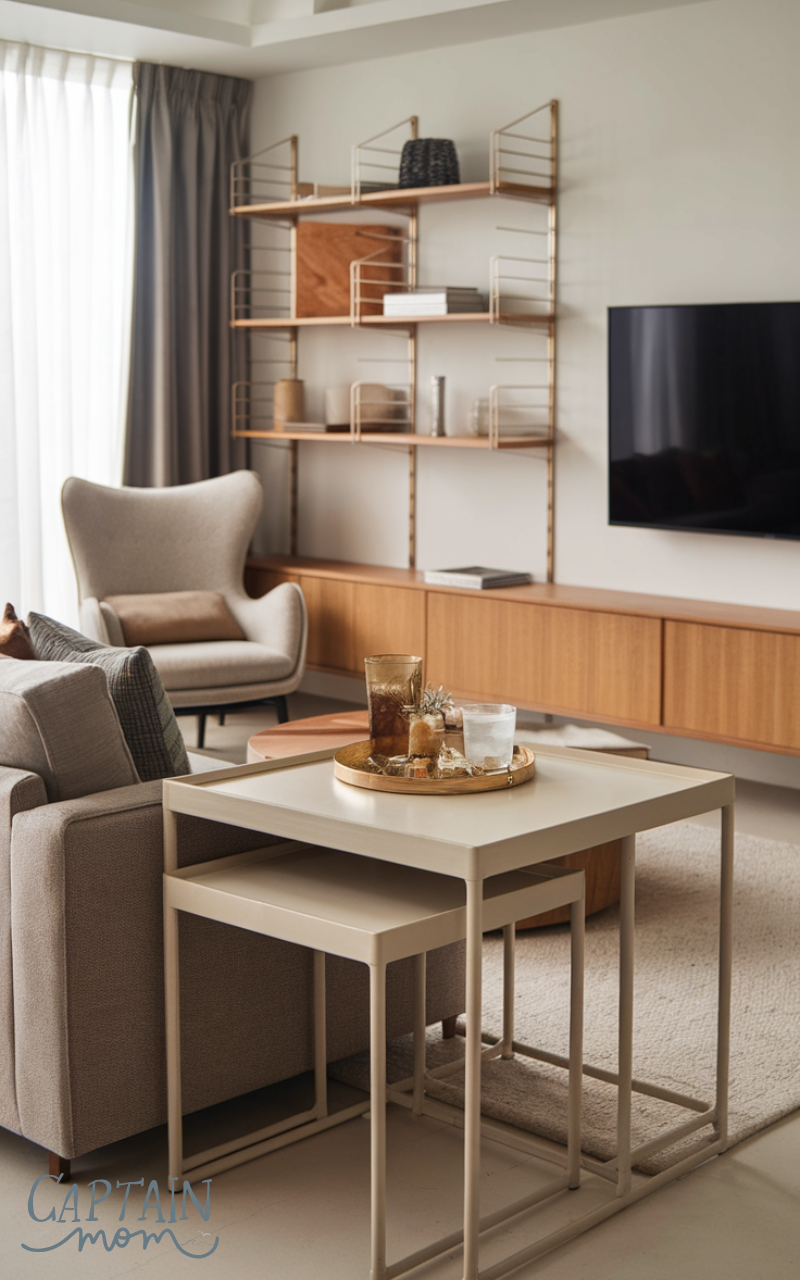
Nesting tables are flexible layout ideas for a living room without a coffee table because they can be pulled out when entertaining and tucked away afterward. Their compact design keeps the room uncluttered while still offering practicality. Choose lightweight styles for easy movement.
7. Rely on Built-In Storage Nearby
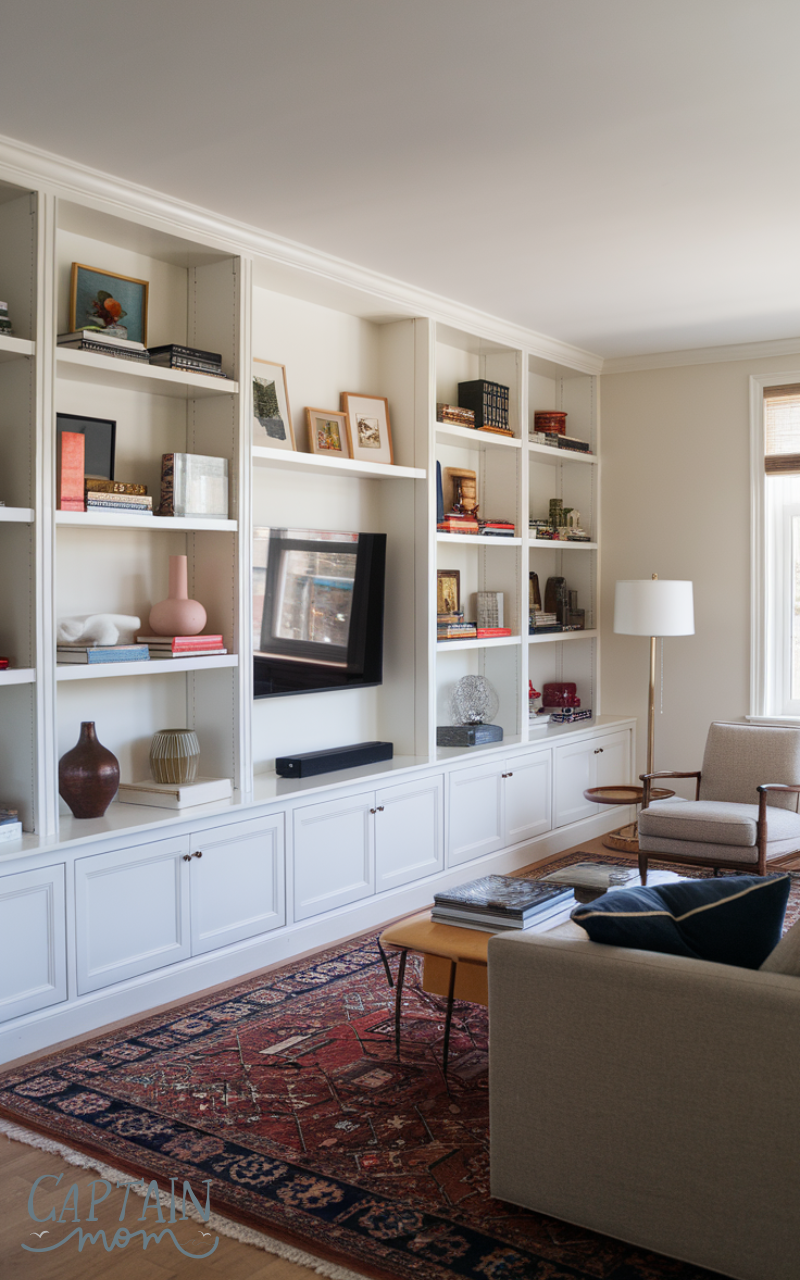
Built-in shelving or storage units support layout ideas for a living room without a coffee table by providing nearby surfaces for everyday items. When essentials are stored within reach, a central table becomes unnecessary. This creates a clean and intentional layout with less visual clutter.
6. Angle Seating Toward Each Other
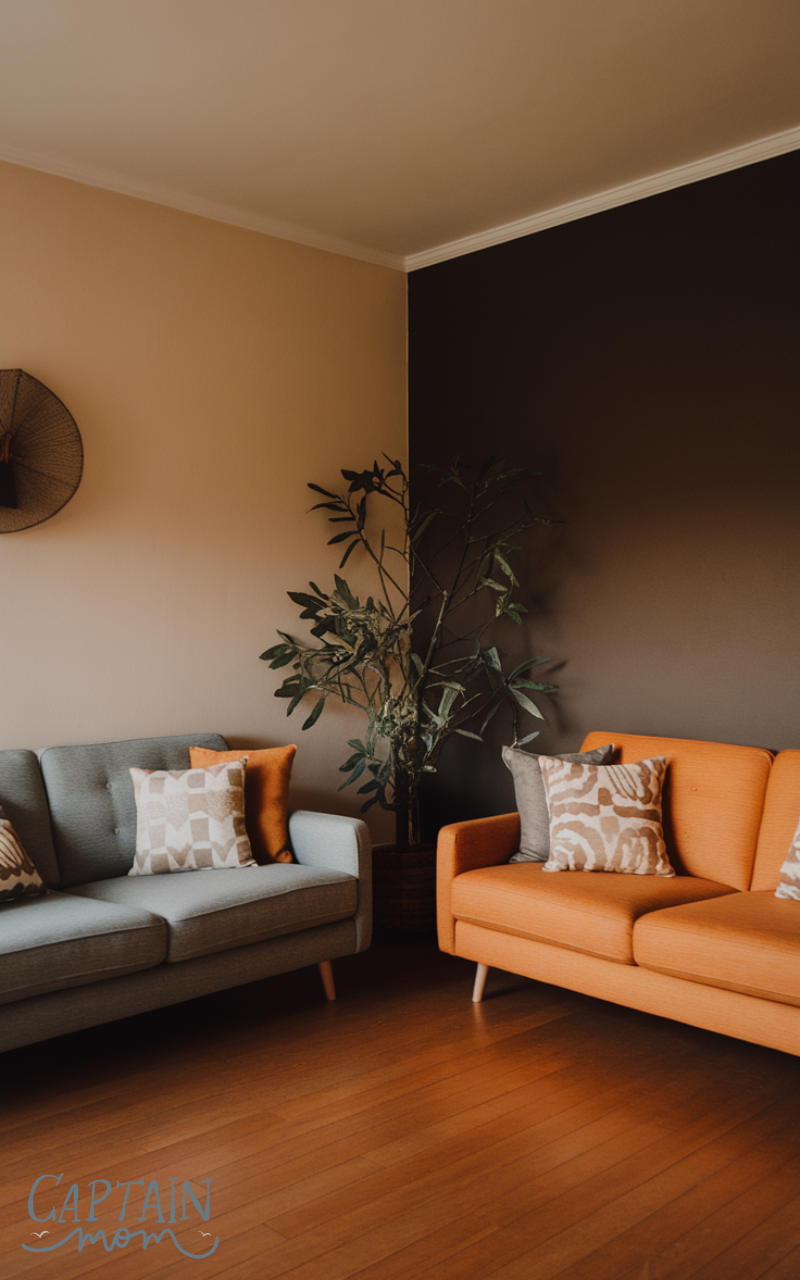
Angling sofas or chairs toward each other is a key element in layout ideas for a living room without a coffee table. This encourages conversation and connection without relying on a central table. The arrangement feels cozy, balanced, and thoughtfully designed.
5. Use a Tray on an Ottoman or Pouf
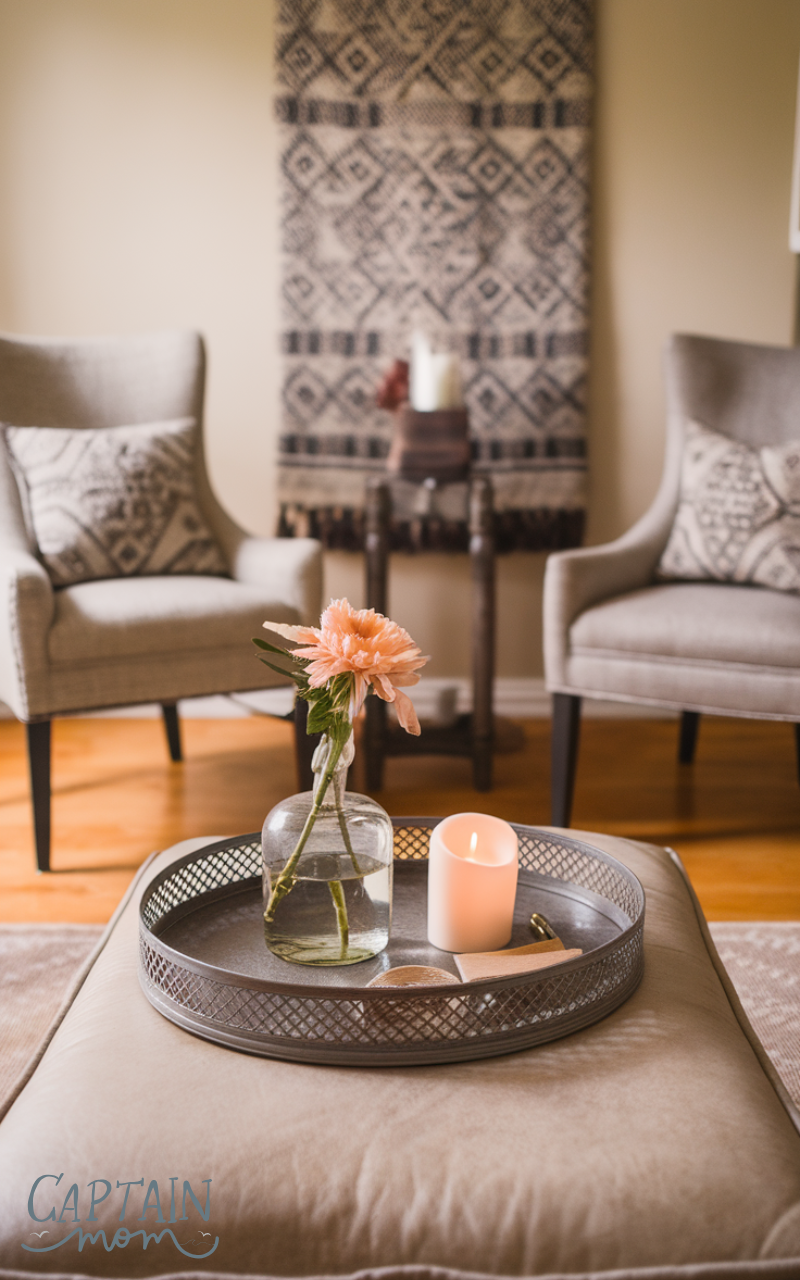
A decorative tray is a subtle addition to layout ideas for a living room without a coffee table. Placed on an ottoman or pouf, it creates a stable surface for drinks or décor while remaining easy to remove. This keeps the layout adaptable and stylish.
4. Add a Statement Armchair
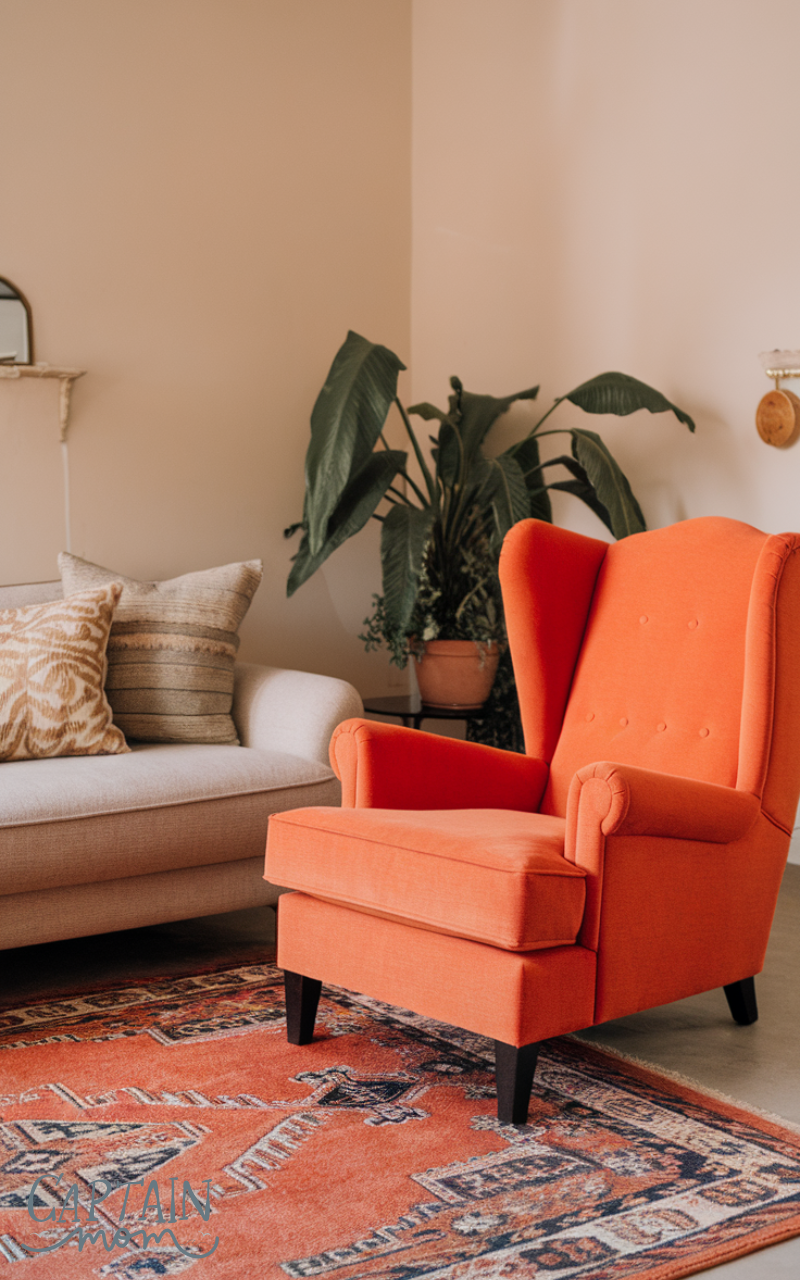
A statement armchair enhances layout ideas for a living room without a coffee table by filling visual space and adding personality. Position it slightly angled toward the sofa to maintain flow and balance. This approach shifts focus from the center to the seating itself.
3. Keep Accessories Minimal
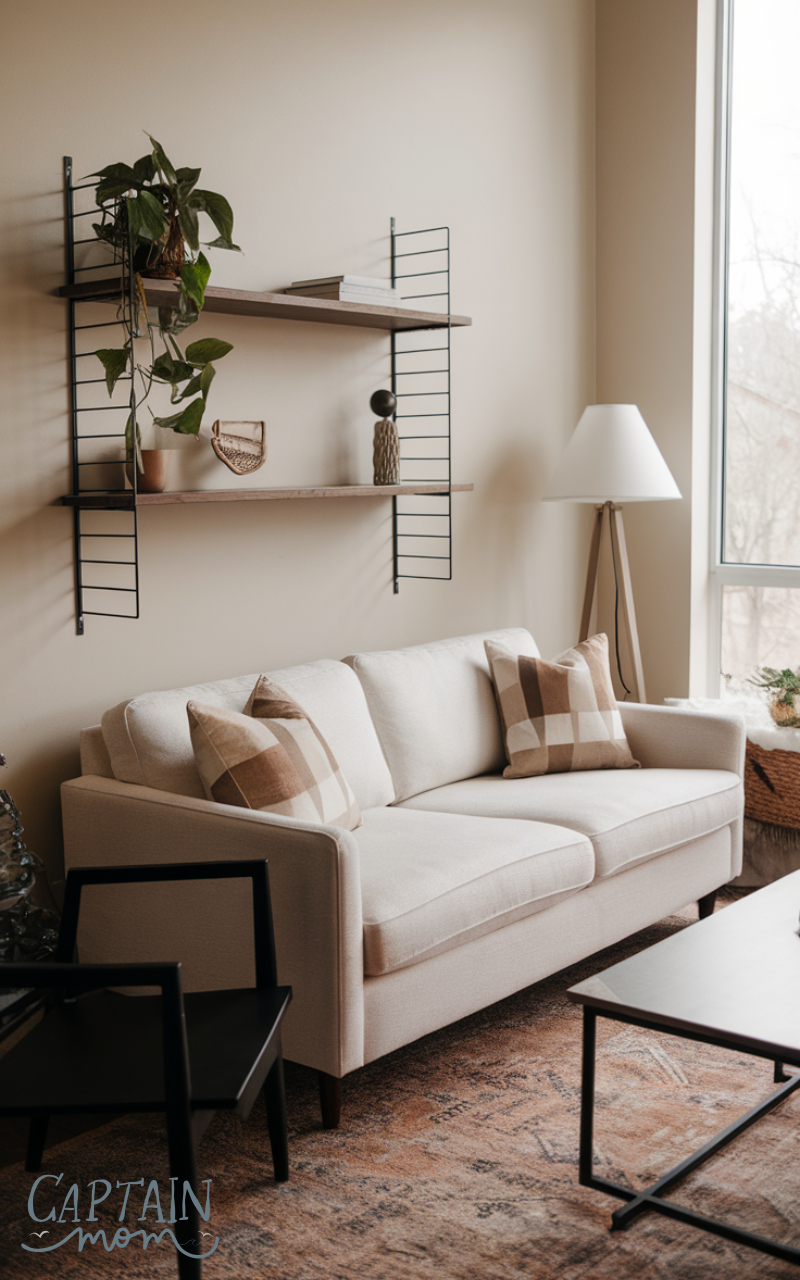
Minimal accessories are essential in layout ideas for a living room without a coffee table because too many items can make the room feel scattered. Focus on a few intentional décor pieces like cushions, throws, or wall art. A clean look helps the layout feel calm and organized.
2. Create Zones with Furniture Placement
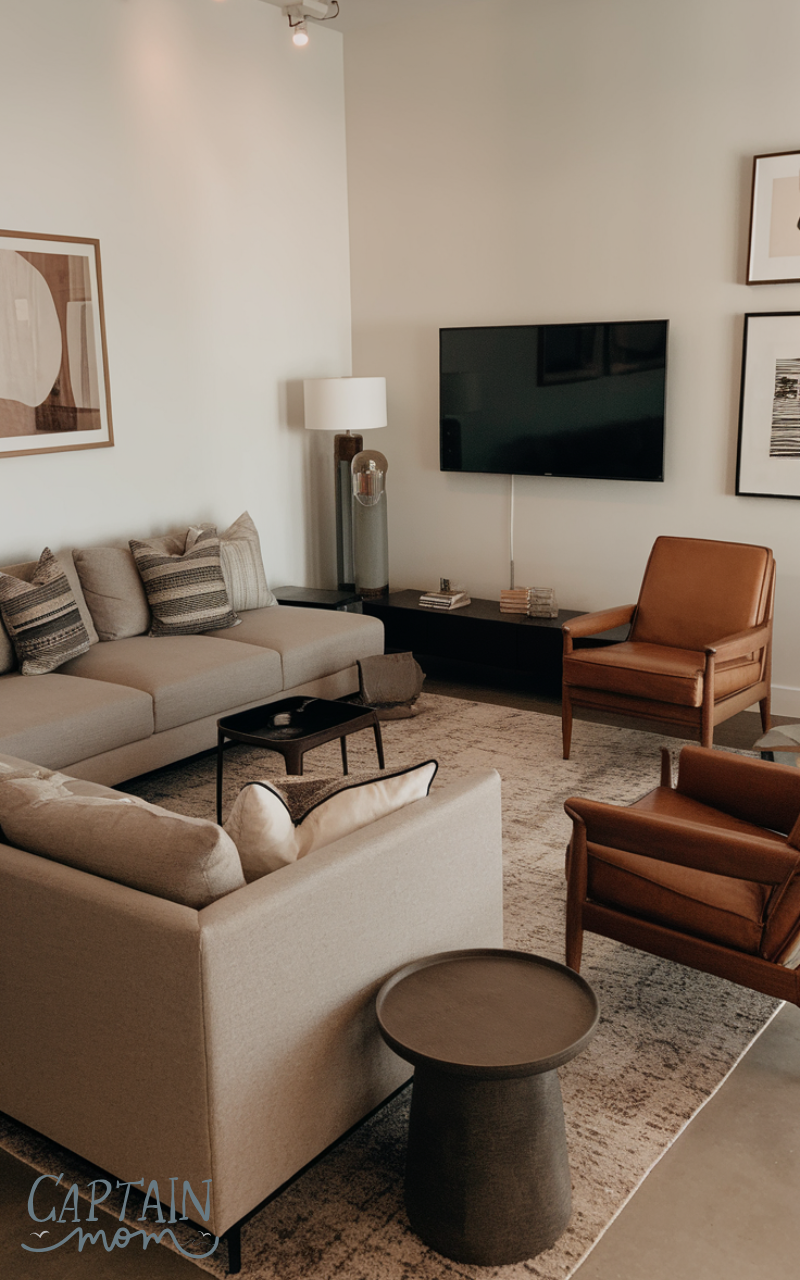
Zoning is one of the smartest layout ideas for a living room without a coffee table. Arrange seating to define conversation areas, reading corners, or TV zones. Clear zones replace the need for a central table and make the space feel structured yet open.
1. Prioritize Comfort and Flow
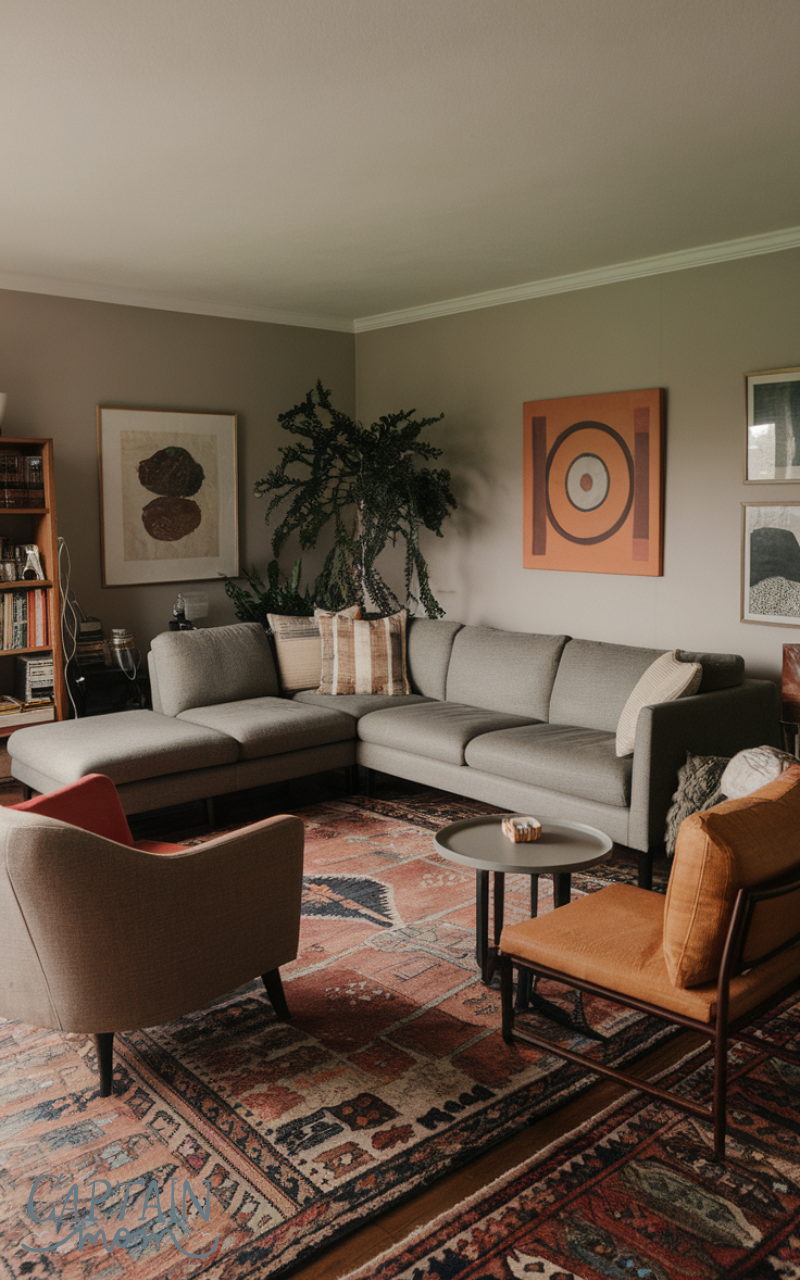
Comfort and flow are the most important layout ideas for a living room without a coffee table. Ensure walkways are clear, seating feels inviting, and everything is easy to access. When the room flows naturally, a coffee table becomes optional rather than essential.
Conclusion
These layout ideas for a living room without a coffee table show that you can create a stylish, functional, and comfortable space without relying on a traditional centerpiece. By focusing on flow, flexible furniture, and smart placement, your living room can feel open and inviting. If you enjoyed these ideas, don’t forget to subscribe to my blog for more home layout inspiration, practical décor tips, and creative living room solutions

[…] creates a calm spot for reading or relaxing. I ran into similar layout questions when planning a Living Room Without a Coffee Table, and it taught me that zones matter more than matching furniture […]
[…] a small Minimal Floating Shelves Living Room, anything bulky instantly shrinks the space. A slimmer coffee table with thinner legs or even a soft ottoman would visually open the center. Mounting the TV will help […]